
New Directions in Personalized Cancer Treatment: Cancer Vaccines and mRNA Cancer Therapy (Precise RNA Gene Signal Blockade)
In modern oncology, treatment is no longer limited to surgery, chemotherapy, or radiotherapy — it has entered a new era of personalized precision therapy. Every patient’s cancer has unique genetic and immunological characteristics, requiring fully tailored treatment strategies. Currently, two major emerging clinical approaches — cancer vaccines and mRNA cancer therapy — target the two core mechanisms of immune system activation and tumor gene control, respectively.
Personalized Cancer Treatment — From Genes to Immunity, Targeting the Root Cause
Customising a Unique Anti-Cancer Strategy for Every Patient, Minimising Side Effects
As oncology advances, treatment is no longer solely focused on “destroying the tumour itself” — it now addresses the deeper question: Why do cancer cells persist and keep spreading?
The core philosophy of modern personalized therapy is “target the root cause while reducing side effects”. Through ultra-precise genetic and immunological profiling, we identify each patient’s unique tumour pattern and select the most suitable, gentlest intervention. This approach moves away from blunt-force attack and instead scientifically coordinates the body’s own defence system to maximise efficacy while minimising treatment-related suffering.
Cancer Vaccines: Re-“tag” the tumour so immune cells can once again recognise and actively hunt it down.
mRNA Cancer Therapy (Precise RNA Gene Signal Blockade): Works continuously 24/7 after a single administration, relentlessly targeting cancer cells while leaving healthy cells unharmed.
Cancer Vaccine
A cancer vaccine is a personalised immunotherapy that uses the patient’s own circulating tumour cells (CTCs) to create a custom vaccine containing tumour-specific antigens.
With this technology, the immune system can re-recognise tumour cells and launch a targeted immune attack, achieving the effect of “awakening the body’s own defence system”.
The entire treatment is administered by injection, with a gentle process and relatively mild side effects, such as temporary fatigue or redness/swelling at the injection site.
This approach is particularly suitable for patients who wish to boost anti-cancer immunity while minimising systemic burden.
mRNA Cancer Therapy
(Precise RNA Gene Signal Blockade)
Precise RNA gene signal blockade is a gene-level personalised therapy. By analysing the patient’s tumour gene expression profile, custom RNA or oligonucleotide sequences are designed to prevent cancer cells from producing essential proteins, thereby inhibiting tumour growth.
This therapy offers high specificity and low off-target interference, suppressing tumour activity at the molecular level and controlling disease progression at its root.
Overall side effects are minimal, making it particularly suitable for patients who wish to reduce the burden of conventional chemotherapy.
How to Receive Cancer Vaccines or mRNA Cancer Therapy
If a patient is considering one of these two therapies, they typically go through the following steps:

1. Blood Draw and Genetic/Cancer Cell Analysis
The entire treatment begins with a simple blood draw. Using this blood sample, the laboratory analyses the cancer cells. This process efficiently captures sufficient information to provide a solid foundation for creating a personalised cancer vaccine or mRNA cancer therapy.

2. Laboratory Design of a Custom Cancer Vaccine
Based on the test results, the laboratory manufactures a cancer vaccine unique to the patient’s cancer cells or oligonucleotides specifically for mRNA cancer therapy. Patients often view this step as “having a bespoke weapon custom-made”, bringing tangible hope.

3. Receiving Treatment
mRNA cancer therapy is typically administered via intravenous infusion, while the cancer vaccine is given as subcutaneous injections in multiple doses according to the treatment schedule. Compared with chemotherapy, patients generally report mild side effects, such as slight fatigue or brief discomfort, with no severe hair loss or nausea. For patients, maintaining their appearance and daily functioning means preserving dignity and quality of life.

4. Follow-Up Monitoring
Patients need regular follow-up visits to monitor tumour shrinkage or growth inhibition. Throughout this process, patients tend to be more actively engaged, because the treatment plan is designed specifically for their own cancer cells, rather than a one-size-fits-all approach.
How Does a Cancer Vaccine Work?
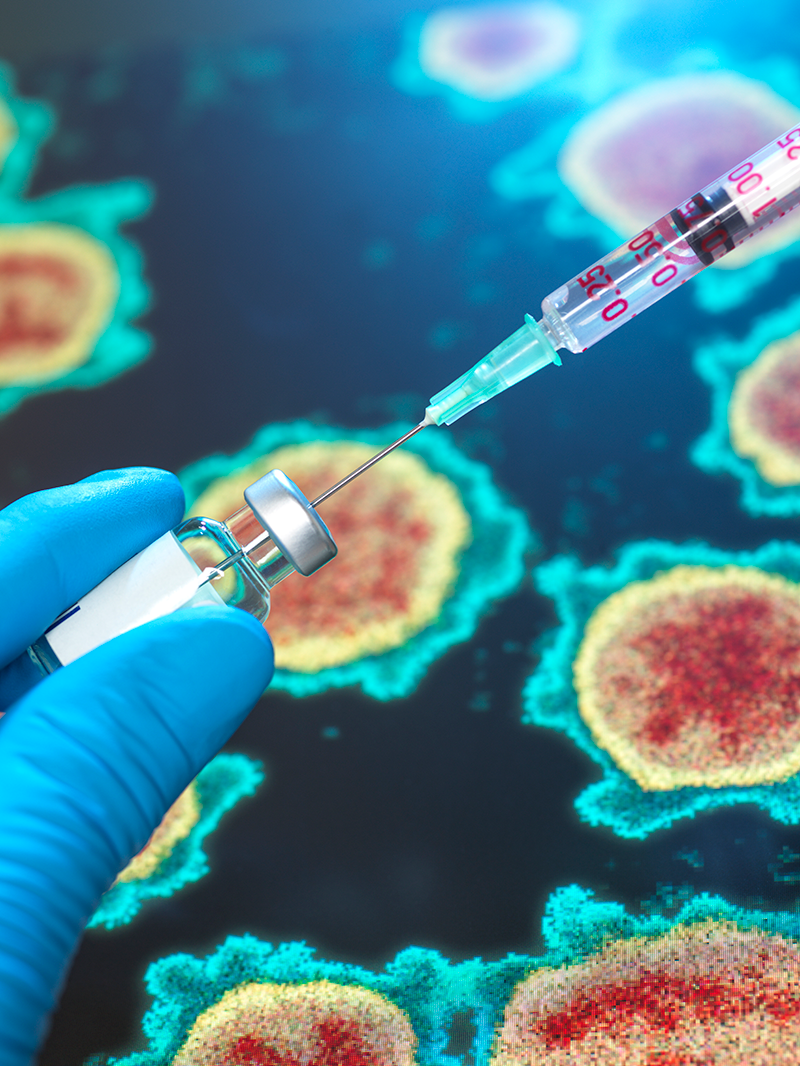
The principle of a cancer vaccine is to use the unique characteristics of the patient’s own tumour cells to re-awaken the immune system so it recognises cancer cells again.
Treatment begins with a simple blood draw. The laboratory uses advanced flow cytometry to isolate circulating tumour cells (CTCs) from the blood. These cells are specially processed to create a cell lysate vaccine containing complete tumour antigens.
When the vaccine is injected, dendritic cells in the immune system absorb these antigens and activate T-cells to attack cancer cells bearing the same markers.
Because the entire process uses the patient’s own cells, the reaction is generally gentle, with fewer side effects, while generating a highly specific and long-lasting immune response.
How Does mRNA Cancer Therapy (Precise RNA Gene Signal Blockade) Work?
The core of mRNA cancer therapy (precise RNA gene signal blockade) lies in disrupting the genetic signalling inside cancer cells.
Cancer-cell DNA contains the genetic blueprint, which is transcribed into mRNA and then translated into proteins essential for the cancer cell’s growth, proliferation, and ability to evade immune surveillance.
Oligonucleotides bind to the specific mRNA, triggering its degradation and preventing protein production. In simple terms, the cancer cell loses its ability to manufacture critical proteins, and tumour growth is thereby suppressed.
This mechanism continues working 24/7 after a single administration, relentlessly targeting cancer cells without harming healthy cells.
For patients, this means the treatment operates in a stable, continuous manner while causing minimal disruption to daily life.
| Treatment methods | Features |
|---|---|
| ⚠️Chemotherapy | Widespread damage, while normal cells are also damaged, resulting in significant side effects. |
⚠️ Targeted therapy | Requires specific mutations and is prone to drug resistance; efficacy will gradually decline. |
⚠️ Immunotherapy | Not suitable for all patients; may cause severe immune side effects. |
✅ Personalised cancer treatment | Personalized cancer treatments, such as cancer vaccines and mRNA cancer therapy (precise RNA gene signal blocking), can precisely target a patient’s cancer cells, offering high specificity and fewer side effects. |
Free cancer support
Advantages of Personalised Cancer Treatment
- Highly Targeted mRNA cancer therapy and cancer vaccines precisely target cancer cells without the widespread damage to normal cells seen in chemotherapy. Extremely high specificity.
- Milder Side Effects Patients can maintain daily activities and social life during treatment. Common side effects are only mild fatigue or discomfort at the injection site.
- Truly Individualised Each patient’s therapy is custom-designed, increasing effectiveness and confidence, giving patients the feeling of receiving genuinely unique care.
- Relatively Simple Process Administered via intravenous infusion or subcutaneous injection — no surgery or prolonged hospitalisation required — reducing psychological stress and physical burden while preserving time with family and normal daily life.
- Minimally Invasive & Convenient Fewer treatment sessions, minimal disruption to life, significantly lighter psychological load for patients.